 Skip to content
You pull into your driveway, but instead of a welcoming glow, your eyes lock onto dark, mottled stains. Living with St. Augustine’s 75% average humidity means your home’s exterior is constantly battling coastal elements.
Is your HOA sending “the letter” about those fading pavers? According to local property experts, removing salt spray from St. Augustine homes takes far more than a standard garden hose. The sticky coastal air bakes corrosive salt and organic grime deep into your porous concrete.
Reclaiming your property requires the “Mirror/Shield” maintenance strategy. Professional St. Augustine power washing acts as the mirror, stripping away buildup to reflect true beauty, while sealant provides an invisible protective shield. Applying this dual approach transforms fading hardscapes into vibrant, welcoming entrances.
Soft Washing vs. Pressure Washing: Protecting St. Augustine’s Historic and Modern Exteriors
Since those dark streaks on your siding aren’t just dust, it helps to name the true culprit: Gloeocapsa magma. This algae-like bacteria thrives in St. Augustine’s relentless humidity. When homeowners spot it, their first instinct is often to blast it away with intense water pressure.
Unfortunately, using extreme force on delicate materials often results in permanent surface scarring. Instead of risking damage, modern maintenance relies on “soft washing.” Think of it as laundry for your siding—it uses specialized, gentle soaps to actually kill biological roots rather than just giving the algae a temporary haircut.
Knowing when to use force versus chemistry is exactly why professional power washing services categorize treatments. A quick-reference guide for surface-specific cleaning looks like this:
- Concrete: High Pressure
- Historic Brick/Coquina: Soft Wash
- Siding: Soft Wash
Mastering pressure washing vs. soft washing for historic homes is essential for eliminating mold and mildew from outdoor surfaces safely. Moving from vertical surfaces to walkways requires a different approach to combat how organic growth behaves on porous ground materials.
Why Your Pavers Turn Black or Green—And How Professional Cleaning Breaks the Cycle
The reason St. Augustine pavers turn black or green after summer thunderstorms lies in the stone’s anatomy. Though driveway pavers feel solid, they actually behave like giant concrete sponges. Their surface features microscopic pores that trap dirt and airborne spores, creating the perfect damp environment for organic growth.
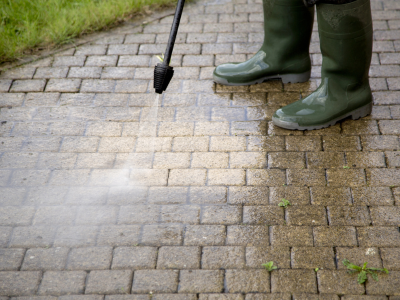
Removing just the top layer of this grime leaves the microscopic roots intact. When you rely solely on pressure washing pavers without killing the organic layer, the next rainstorm simply reactivates those hidden spores. The dark stains return within weeks, and this rapid algae growth transforms beautiful exterior walkways into slippery, dangerous safety hazards for your guests.
Breaking this endless maintenance cycle requires stopping moisture from penetrating the stone entirely. A complete system of power washing and paver sealing successfully removes deep-rooted bacteria, but the cleaning phase alone leaves those pores completely exposed. To protect your investment, you must close them using paver sealing and polymeric sand to stop weeds and stains.
The ‘Shield’ Strategy: Using Paver Sealing and Polymeric Sand to Stop Weeds and Stains
Once those microscopic pores are clean, leaving them open invites disaster. The thorough paver sealing that St. Augustine homeowners trust acts like an invisible shield over the stone. Think of the “Red Wine Test”: spill wine on unsealed pavers, and it soaks in deeply, mirroring the familiar nightmare of removing oil stains from concrete driveways. On a sealed surface, liquids instantly bead up for easy wiping.
Protecting the surface is only half the battle; the gaps between your pavers also need defense. Using a polymeric sand replacement for stabilizing joints locks your hardscape together tightly. When activated by water, this advanced sand hardens to provide crucial benefits:
- Prevents weed seeds from rooting
- Stops sand washout during heavy storms
- Deters ants and pests
Combining this hardened sand with a professional sealant creates a seamless, non-porous barrier across your patio. This dual-layer strategy is the definitive method to prevent weed growth between pavers, starving rogue seeds of the moisture they need to sprout into a driveway jungle.
Securing your property against these organic intruders drastically reduces your weekend chores. Choosing the appropriate protective finish ensures these benefits last through extreme coastal weather conditions.
Choosing the Right Finish: UV Protection and Non-Slip Benefits for Florida Living
In St. Augustine’s humid climate, choosing water-based rather than solvent-based paver sealants is critical because our coastal soil traps constant moisture underneath your stones. Water-based options offer essential “breathability.” This allows trapped groundwater vapor to escape easily without turning your beautiful finish into a cloudy, trapped mess.
Beyond managing ground moisture, defending against the harsh Florida sun requires built-in defense. Incorporating UV protection for decorative stone pavers acts exactly like applying a premium sunscreen to your driveway, preventing those vibrant, warm tones from bleaching into a dull, chalky gray over time.
Safety is the final priority, especially around slippery areas like pool decks. Adding a microscopic grit additive reveals the true benefits of non-slip paver sealer finishes, giving wet feet a firm grip without altering the look of the stone. Investing in these targeted protections leads directly to a tangible financial payoff.
The Financial Payoff: From Maintenance Anxiety to Lasting Curb Appeal
You no longer have to stare at faded stones and stress over professional driveway restoration costs in St. Augustine. By investing in regular power washing and exterior maintenance, you treat your property as both a cosmetic mirror and a structural shield, helping increase your home’s resale value. This smart upkeep can contribute to a 5–10% curb appeal boost while helping prevent a costly $20,000 paver replacement down the line.
To maintain this protection year-round, adhere to a standard coastal maintenance schedule:
- Annual: Soft wash for siding
- Bi-annual: Driveway cleaning
- Every 3-5 years: Complete sealing cycle
Protect your property against coastal elements with a simple three-step plan: inspect for organic growth, deep clean the grime, and shield the surface. Your home will be ready to withstand the weather and beautifully welcome you back.