 Skip to content
If you’ve been searching for pressure washing in Palm Coast, you’ve probably also seen the term “power washing” used just as often. Many homeowners assume the two are interchangeable, and honestly, most companies use the terms loosely too. But there is a real difference, and knowing it can help you choose the right service for your home.
This guide breaks down what separates pressure washing from power washing, which one works best for different surfaces around your property, and how to know which service to book for your next cleaning project.
What Is Pressure Washing?
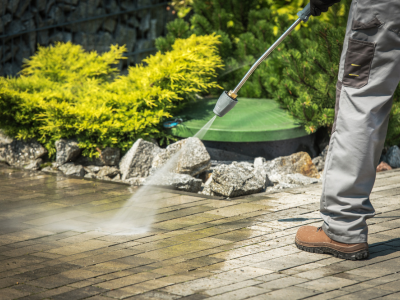
Pressure washing uses high-pressure water, at room temperature, to blast away dirt, grime, mold, and stains from hard surfaces. It relies purely on water pressure, measured in PSI (pounds per square inch), to break up buildup and rinse it away.
Pressure washing works well on:
- Concrete driveways
- Sidewalks
- Patios and pool decks
- Pavers
- Retaining walls
- Fences
Because it doesn’t use heated water, pressure washing is generally considered the gentler of the two methods, though “gentler” still means strong enough to strip paint or damage soft materials if used incorrectly.
What Is Power Washing?
Power washing works the same way as pressure washing, using high-pressure water, but with one key difference: the water is heated. That added heat makes power washing more effective at breaking down tough grime, oil stains, grease, and stubborn mold or mildew.
Power washing is often the better choice for:
- Oil and grease stains on driveways or garage floors
- Heavy mold and mildew buildup
- Commercial properties with tougher exterior stains
- Surfaces that see heavy grime accumulation, like dumpster pads or loading areas
The heat helps loosen contaminants that cold water alone might struggle to fully remove, which is why power washing is common in commercial and industrial cleaning.
Pressure Washing vs Power Washing: Quick Comparison
| Feature | Pressure Washing | Power Washing |
| Water temperature | Cold/room temperature | Heated |
| Best for | General dirt, grime, mold | Oil, grease, tough stains |
| Common surfaces | Driveways, patios, pavers, fences | Commercial surfaces, garage floors |
| Risk to delicate materials | Lower | Higher if used incorrectly |
| Typical use case | Residential exteriors | Heavy-duty and commercial cleaning |
Both methods use the same core equipment principle, high-pressure water, but the heat element in power washing changes what it’s best suited for. Neither method is “better” across the board. The right choice depends entirely on the surface and the type of buildup you’re dealing with.
Why This Matters for Palm Coast Homes
Florida’s climate creates a specific set of challenges that make choosing the right cleaning method more important than it might seem.
Humidity feeds algae and mold growth. Palm Coast’s warm, humid air keeps outdoor surfaces damp longer, which speeds up mold and algae buildup on driveways, walkways, and pool decks.
Salt air adds another layer of grime. Homes closer to the coast deal with salt residue that combines with dirt and organic buildup, making some surfaces harder to clean with cold water alone.
Delicate surfaces are common. Many Palm Coast homes have softer materials like stamped concrete, painted surfaces, or older pavers that can be damaged by using too much pressure or the wrong technique.
Choosing between pressure washing and power washing for your Palm Coast property often comes down to matching the method to both the surface and the type of buildup present.
When to Choose Pressure Washing
Pressure washing is usually the right call for most residential cleaning projects around a Palm Coast home. It’s effective, lower risk, and works well on the majority of exterior surfaces homeowners deal with regularly.
Good candidates for pressure washing include:
- Concrete driveways with general dirt and algae buildup
- Paver patios and pool decks
- Sidewalks and walkways
- Fences and outdoor furniture
- Siding (when done at the correct pressure setting)
If your main concern is dirt, algae, pollen, or general grime buildup, cold water pressure washing usually gets the job done without added risk to the surface.
When to Choose Power Washing
Power washing makes more sense when you’re dealing with tougher stains that cold water struggles to break down. The heated water gives it an edge for specific situations.
Power washing tends to work better for:
- Oil or grease stains on concrete or asphalt
- Heavy commercial or industrial grime
- Thick, established mold or mildew
- Surfaces that haven’t been cleaned in several years
If you’re a business owner in the Palm Coast or wider Flagler County area dealing with stubborn stains on a commercial property, power washing is often the more effective option.
Why Choosing the Wrong Method Can Cause Damage
Using the wrong pressure level or technique on the wrong surface is one of the most common mistakes in DIY exterior cleaning. Too much pressure, or using heated water on a surface that doesn’t need it, can lead to:
- Etched or damaged concrete
- Stripped paint on siding or trim
- Torn or loosened pavers
- Damaged wood on decks or fences
- Water forced behind siding, leading to moisture problems
This is one of the biggest reasons professional cleaning is worth considering over a rented pressure washer. A trained crew knows which PSI setting, nozzle, and method to use for each surface, which protects your property while still getting an effective clean.
How Often Should You Schedule Cleaning
Most Palm Coast homes benefit from a professional pressure washing or power washing service once or twice a year, though it depends on a few factors:
- Proximity to the coast – Salt air speeds up buildup for homes closer to the water.
- Tree coverage – Shaded properties tend to develop algae and mold faster.
- Surface type – Concrete, pavers, and siding all collect grime at different rates.
- Last cleaning date – If it’s been more than a year, buildup is likely more stubborn and may need extra attention during the first visit.
Staying on a regular schedule makes each cleaning faster and less intensive, since buildup never gets the chance to fully set in.
What a Professional Cleaning Visit Looks Like
Whether you’re booking pressure washing or power washing in Palm Coast, a professional visit typically follows the same basic process:
- Assessment – The crew evaluates the surface type and level of buildup.
- Method selection – Based on the surface, they choose the right pressure level and whether heated water is needed.
- Pre-treatment – Stubborn stains or mold may get a cleaning solution applied before washing.
- Washing – The surface is cleaned using the appropriate pressure and technique.
- Rinse and inspection – A final rinse and walkaround confirms the surface is fully clean.
This process protects your property while still delivering a thorough clean, which is harder to guarantee with a rented DIY unit.
Combine Services for a Fully Refreshed Property
Most homeowners scheduling pressure washing in Palm Coast also have other areas that could use attention at the same time. Pairing your driveway or patio cleaning with paver sealing helps protect surfaces after they’re cleaned, while a roof soft washing visit can address algae staining up top in the same trip. If your home also needs minor exterior repairs, our handyman services can be scheduled alongside your cleaning appointment.
FAQ: Pressure Washing and Power Washing in Palm Coast
Is power washing better than pressure washing?
Neither is universally better. Power washing’s heated water works better on oil, grease, and heavy stains, while pressure washing is typically sufficient for general dirt, algae, and mold on most residential surfaces.
Can pressure washing damage my driveway?
Yes, if the wrong pressure setting or nozzle is used. Professional equipment and technique reduce the risk of etching or damaging concrete surfaces.
How much does pressure washing cost in Palm Coast?
Cost depends on the size of the area, the surface type, and how much buildup needs to be removed. A free estimate gives you an accurate price for your specific property.
How often should I have my home pressure washed?
Most Palm Coast homes benefit from a professional cleaning once or twice a year, though homes closer to the coast or under heavy tree cover may need more frequent service.
Can I use power washing on my house siding?
It depends on the siding material. Heated water and high pressure can damage certain siding types, so it’s best to have a professional assess the material before choosing a method.
Final Thoughts
Pressure washing and power washing both use high-pressure water, but the heat difference changes what each one does best. Pressure washing works well for most residential surfaces around a Palm Coast home, while power washing is often the stronger choice for oil stains, grease, and heavy-duty grime. Knowing which method fits your surface helps protect your property while still getting the clean you’re after.
Ready to Refresh Your Property?
A1A Pressure Washing provides both pressure washing and power washing services throughout Palm Coast, Flagler County, and Northeast Florida. Request a free estimate today and let us help you choose the right method for your home.