 Skip to content
If you have noticed dark streaks, green patches, or black stains creeping across your roof, you are not alone. Almost every homeowner in Northeast Florida deals with this at some point. The culprit is usually a type of algae that thrives in our humid, coastal climate, and it spreads faster than most people expect.
The good news is that roof cleaning does not have to mean climbing up with a pressure washer and blasting away at your shingles. In fact, that approach can cause more harm than good. This guide covers what actually causes those stains, why the cleaning method matters, and how to keep your roof looking good and lasting longer.
Why Roof Stains Are So Common in Florida
Florida’s heat, humidity, and coastal air create ideal conditions for organic growth on rooftops. Understanding what is actually growing up there helps explain why the right cleaning method makes such a big difference.
The most common causes of roof staining include:
- Gloeocapsa magma – a blue-green algae that appears as dark streaks, usually starting near the ridge and running down the roof
- Moss and lichen – more common on shaded roofs or homes near tree cover
- Mold and mildew – thrives in areas with poor airflow or persistent moisture
- Dirt and airborne debris – accumulates faster near busy roads or during pollen season
- Salt air residue – a factor for homes closer to the coast in St. Augustine Beach and Ponte Vedra
None of these are just cosmetic issues. Left untreated, algae and moss can trap moisture against shingles, which shortens the life of your roofing material and can lead to costly repairs down the road.
How Roof Algae Spreads
Algae spores travel by wind, rain runoff, and even birds and other animals moving across shared roof lines in a neighborhood. That is why you often see entire streets or HOA communities with roofs showing the same dark streaking pattern around the same time. Once one roof is affected, nearby homes tend to follow within a season or two.
Signs Your Roof Needs Cleaning
- Dark streaks running vertically down the roof slope
- Green or black patches, especially on the north-facing side
- Visible moss growth along the edges or in valleys
- A general dulling of the roof’s original color
- Neighbors with similar staining on comparable roof ages
If you are seeing two or more of these signs, it is worth scheduling an inspection before the growth spreads further.
Soft Washing vs. Pressure Washing: Why the Method Matters
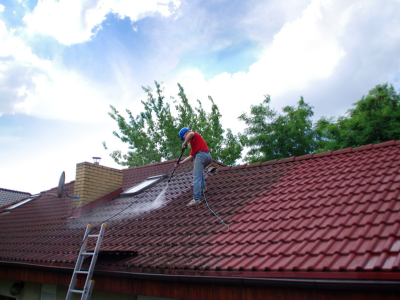
This is the part homeowners get wrong most often. A standard pressure washer, the same one used for driveways and patios, is too aggressive for most roofing materials. High-pressure water can strip protective granules off asphalt shingles, force water under tiles, and even crack older or brittle roofing.
Soft washing solves this problem. It uses low pressure combined with a specialized cleaning solution to kill algae, mold, and moss at the root, then rinses it away gently. The roof is cleaned chemically, not scrubbed or blasted physically.
| Method | Pressure Level | Risk to Shingles | Kills Algae at Root | Best For |
| High-pressure washing | High | High risk of granule loss and cracking | No, only removes surface growth | Driveways, concrete, pavers |
| Soft washing | Low | Minimal risk when done correctly | Yes | Roofs, siding, screen enclosures |
Why Soft Washing Lasts Longer
Because soft washing kills algae and mold spores instead of just knocking visible growth off the surface, the results last significantly longer than a quick pressure rinse. Many homeowners find their roof stays clean for a year or more after a proper soft wash, compared to a few months with high-pressure spraying alone.
What a Professional Soft Wash Includes
- A roof inspection to check for existing damage before cleaning begins
- Application of an algae and mold-killing solution matched to your roofing material
- Low-pressure rinsing to remove loosened debris
- Protection of landscaping, gutters, and surrounding surfaces during the process
- A final walk-through to confirm the roof is clean and undamaged
The Risks of DIY Roof Cleaning
It is tempting to rent a pressure washer and handle roof cleaning yourself, especially with so many DIY videos online. But roof work carries real risks that are easy to underestimate.
Common DIY roof cleaning mistakes include:
- Using too much pressure, which strips granules and voids many roofing warranties
- Standing on wet, slick shingles without proper fall protection
- Using bleach concentrations that are too strong, which can damage landscaping and metal fixtures
- Missing hidden damage that a trained eye would catch during an inspection
- Skipping proper rinse procedures, leaving cleaning solution residue behind
Beyond the physical risk of working at height, incorrect cleaning can also affect your roofing manufacturer’s warranty. Many shingle manufacturers specifically require soft washing rather than pressure washing to keep coverage valid.
How Often Should You Clean Your Roof?
Most homes in St. Augustine, Palm Coast, and the surrounding areas benefit from a professional roof cleaning every one to two years. Homes with heavy tree coverage, north-facing slopes, or locations closer to the coast may need attention sooner, since shade and salt air both accelerate algae growth.
Regular cleaning is also one of the simplest ways to protect your home’s overall exterior appearance. Pairing roof cleaning with routine house washing and pressure washing keeps every surface of your property looking consistent instead of having one clean area next to a stained one.
Roof Cleaning and Hurricane Season
Northeast Florida homeowners have an added reason to stay on top of roof maintenance. Algae and moss buildup can mask minor damage, like lifted shingles or small cracks, that becomes a much bigger problem when storm season arrives. A clean roof makes it far easier to spot potential trouble spots before hurricane season each year, giving you time to schedule repairs while conditions are calm.
HOA Considerations in St. Johns County
Many communities throughout St. Johns County and Ponte Vedra have HOA guidelines that require homeowners to maintain a certain roof appearance, particularly regarding visible staining or algae growth. If your HOA has flagged your roof, a professional soft wash is typically the fastest way to bring your property back into compliance without risking damage that could lead to a larger, more expensive repair.
Protecting Your Investment Long Term
A roof is one of the most expensive components of any home, and premature replacement is rarely cheap. Routine, gentle cleaning extends the functional life of your roofing material by preventing organic growth from breaking down shingles or tiles over time.
Combining roof cleaning with a broader property maintenance routine, including <a href=”#”>paver sealing</a> for driveways and pool decks and periodic <a href=”#”>handyman services</a> for smaller repairs, helps protect your home’s overall value and curb appeal year after year.
Frequently Asked Questions
Is roof cleaning safe for asphalt shingles?
Yes, when done using the soft washing method. Low-pressure application with the right cleaning solution removes algae and mold without stripping the protective granules that keep shingles durable.
Will pressure washing my roof void my warranty?
It can. Many shingle manufacturers specifically exclude damage caused by high-pressure cleaning from their warranty coverage, which is another reason soft washing is the safer choice.
How long does professional roof cleaning take?
Most residential roofs can be soft washed in a few hours, depending on the size of the roof and the severity of the staining. Steep or complex rooflines may take longer.
Can I clean my roof myself?
You can, but the risks of working at height combined with the potential for shingle damage make professional soft washing a safer and more reliable option for most homeowners.
Does roof cleaning help with home value?
Yes. A clean, stain-free roof improves curb appeal and signals to buyers or appraisers that the property has been well maintained, which can positively influence perceived home value.
Keep Your Roof Looking Its Best
Roof staining is one of those problems that only gets worse the longer it sits. What starts as a few faint streaks can spread across the entire roof within a season if it is not addressed. The safest, longest-lasting fix is a proper soft wash from a team that understands Florida roofing materials and local growth patterns.
If your roof in St. Augustine, Palm Coast, or the surrounding Northeast Florida area is showing signs of algae, moss, or staining, A1A Pressure Washing can take a look and recommend the right approach for your home. Request a free estimate today and get ahead of the problem before it spreads further.